
Substantive law
Body of law defining rights, duties, crimes, and punishments.

Tomwsulcer · CC0
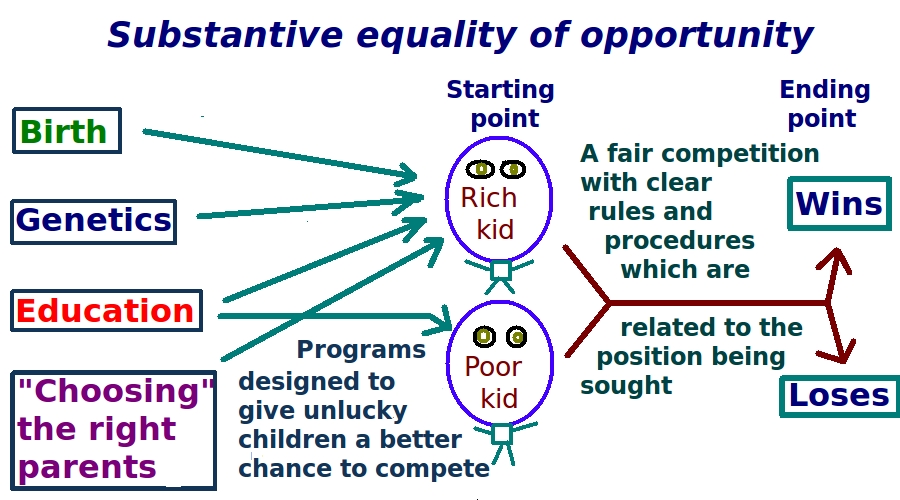
Substantive law is the set of laws that governs how members of a society are to behave. It defines rights and responsibilities in civil law, and crimes and punishments in criminal law, as well as concepts such as substantive equality or substantive due process. It may be codified in statutes or exist through precedent in common law, and is contrasted with procedural law, which governs the procedures for making, administering, and enforcing substantive law.
- field
- Law
- known_for
- Defining rights, responsibilities, crimes, and punishments; contrasted with procedural law
- related_concept
- Procedural law
- source_author
- Henry Sumner Maine
Lore & Background
Substantive law is the set of laws that governs how members of a society are to behave. It is contrasted with procedural law, which is the set of procedures for making, administering, and enforcing substantive law. Substantive law defines rights and responsibilities in civil law, and crimes and punishments in criminal law, substantive equality or substantive due process. It may be codified in statutes or exist through precedent in common law. Substantive laws, which govern outcomes, are contrasted with procedural laws, which govern procedure.
Reader's Guide
Substantive law is a foundational concept in legal systems, distinguishing the rules that define conduct and legal outcomes from the procedures used to implement them. Its significance lies in establishing the actual rights, duties, and prohibitions that govern society, such as what constitutes a crime or a civil obligation. The distinction between substantive and procedural law is critical for understanding how justice is administered: substantive law sets the standards, while procedural law provides the mechanisms. Henry Sumner Maine observed that in early law, substantive law appeared to be 'gradually secreted in the interstices of procedure,' indicating that procedural forms initially dominated legal thinking. This legacy underscores the evolution of law from a focus on technical forms to a clearer articulation of substantive rights and duties. The concept remains central to legal education and practice, as seen in works by Glanville Williams, John W Salmond, and others cited in the source article.
Did You Know?
- Substantive law is contrasted with procedural law, which governs the making, administering, and enforcing of substantive law.
- Substantive law defines rights and responsibilities in civil law, and crimes and punishments in criminal law.
- Henry Sumner Maine said that in early law, substantive law 'has at first the look of being gradually secreted in the interstices of procedure.'
- Substantive law may be codified in statutes or exist through precedent in common law.
Gallery
Frequently Asked Questions
What is Substantive law?
Substantive law is the collection of rules that tell members of a society what they may and must do. It spells out individual rights and obligations in civil matters, and identifies what counts as a crime along with the corresponding punishments.
Who is credited with the concept of Substantive law?
Henry Sumner Maine is recognized as the source authority associated with this body of law. His work helped shape how legal scholars distinguish substantive rules from procedural ones.
What role does Substantive law play in the legal system?
It sets the actual content of legal obligations—defining rights, duties, criminal offenses, and penalties. Without it, procedural rules would have no underlying substance to enforce.
How does Substantive law differ from Procedural law?
Substantive law tells you what the rules are, while procedural law tells you how those rules get made, applied, and enforced in court. Think of it as the 'what' versus the 'how' of the legal system.
Where does Substantive law come from?
It can be written into formal statutes or developed through judicial precedent in common-law systems. It also underpins broader ideas like substantive equality and substantive due process.
More in Public Law 25-38
Elsewhere in the Public Law universe
Spotted an error? Know more?
This is a living reference — every entry is fact-audited, and reader corrections feed straight into our audit queue. Suggest an edit · See this site's audit record