
Treaty
Legally binding agreements between sovereign states under international law.

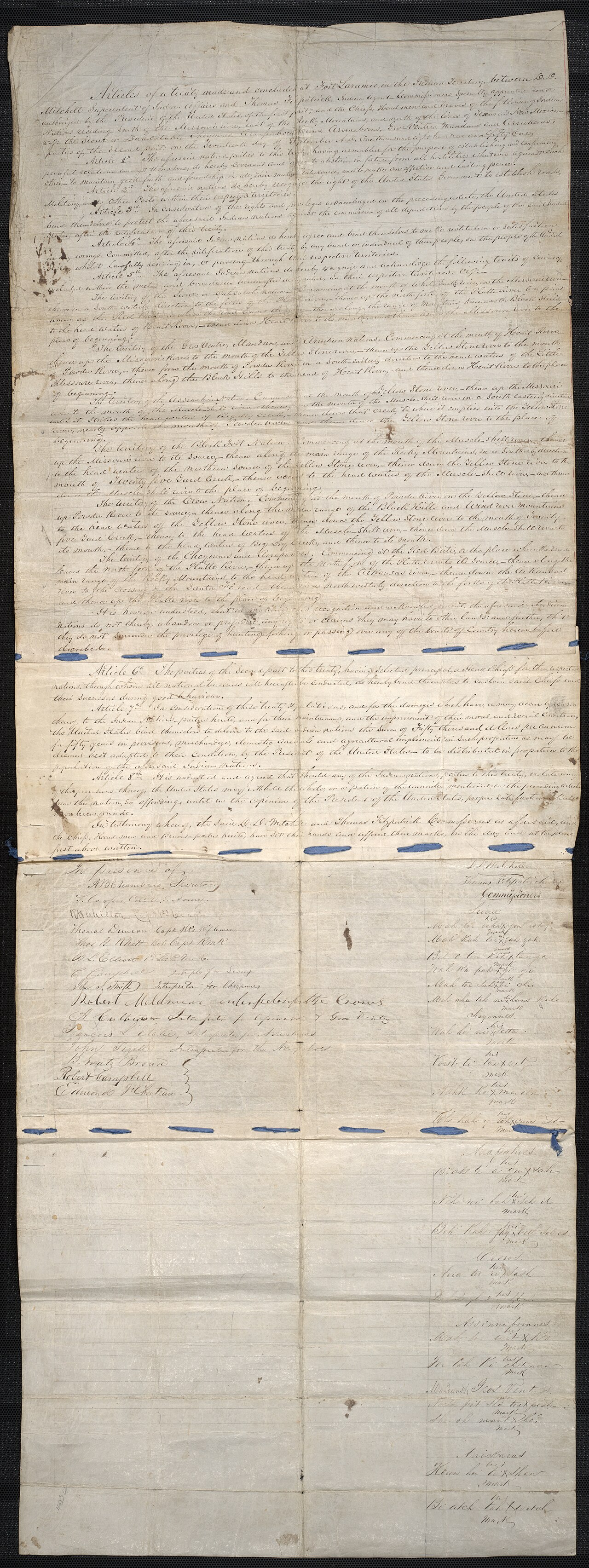
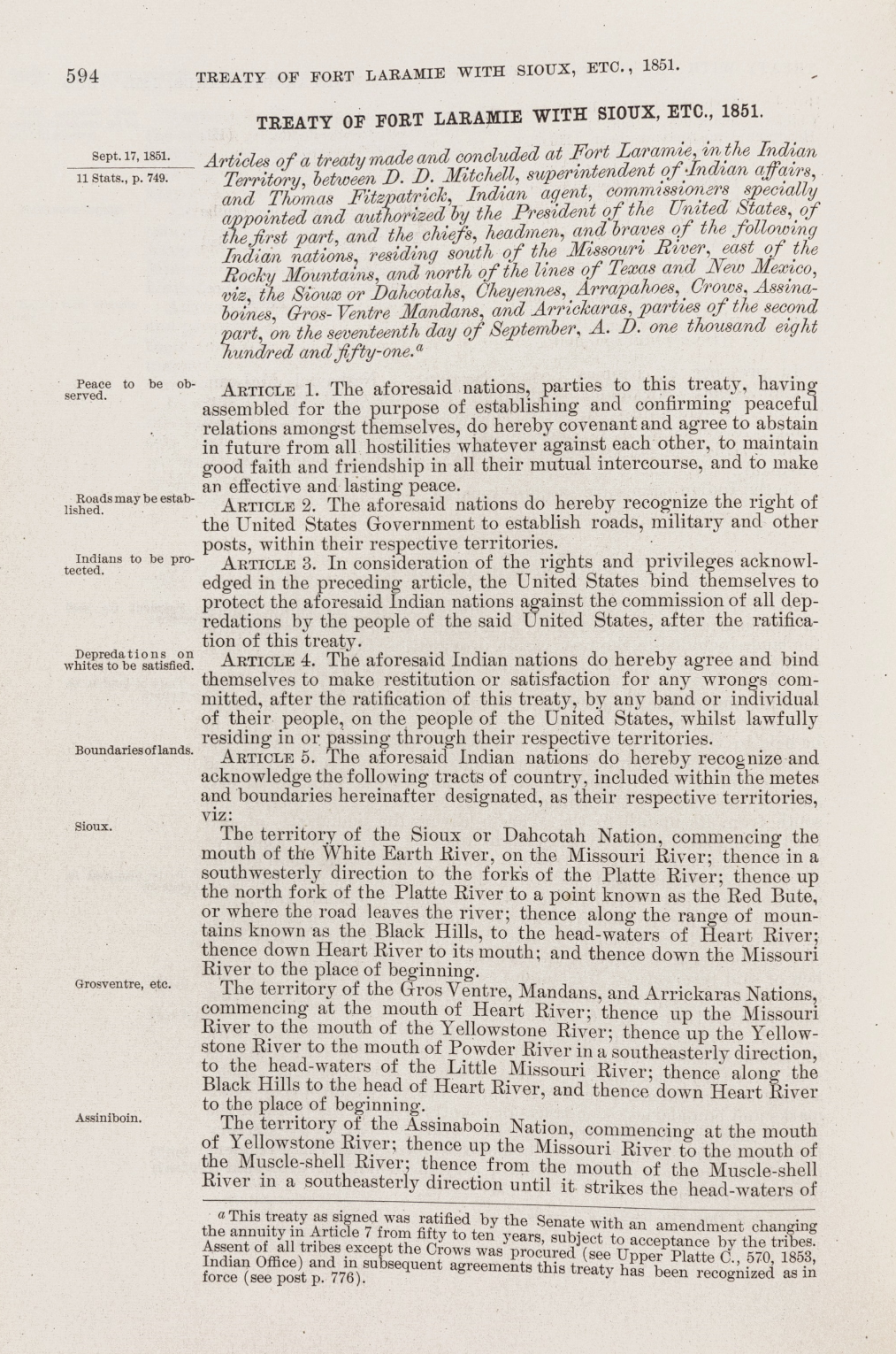
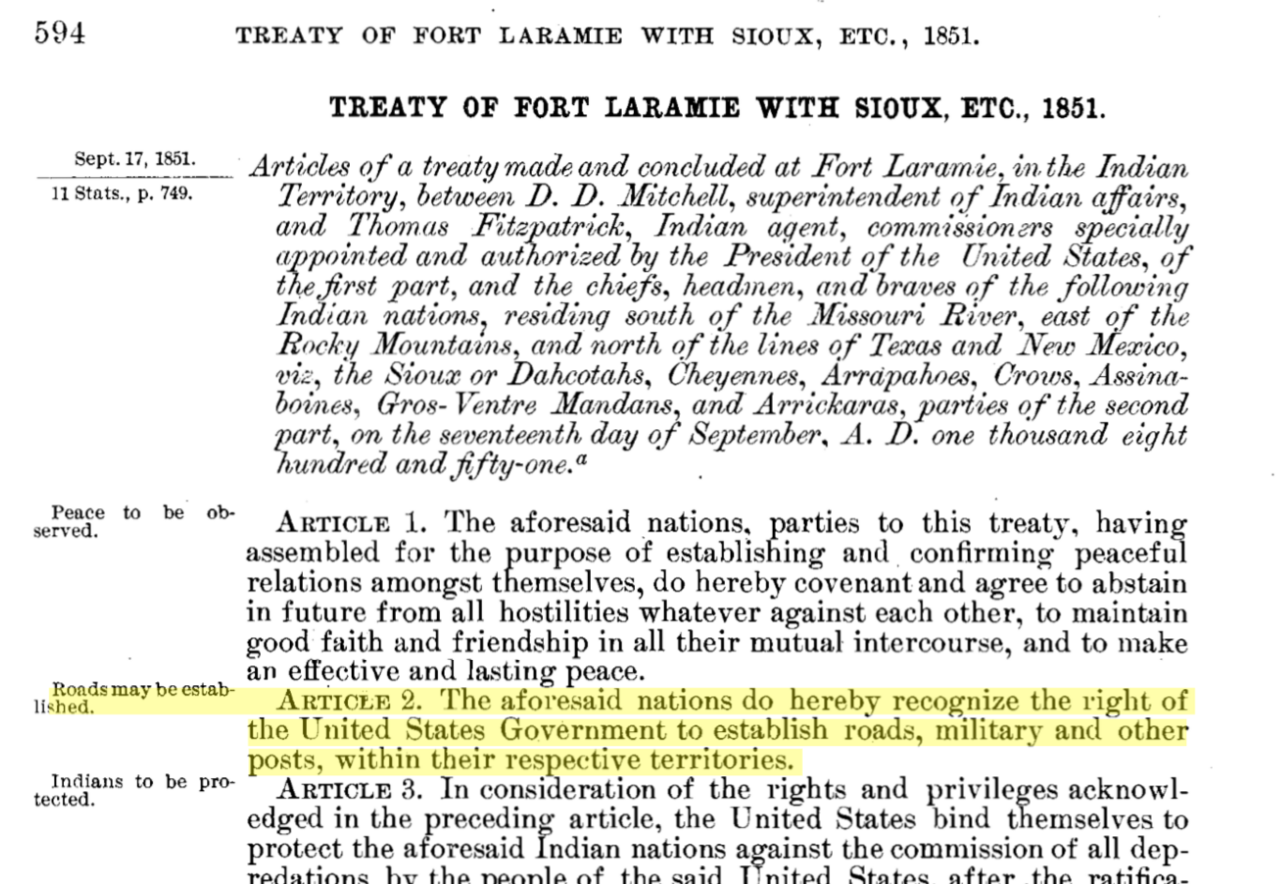
Department of the Interior. Office of Indian Affairs. Record Group 75 · Public domain
A treaty is an international agreement between sovereign states or other subjects of international law, including international organizations, that is governed by international law. Treaties are legally binding on the parties and may be known as international agreements, protocols, covenants, conventions, pacts, or exchanges of letters. They serve as primary sources of international law and have codified or established many international legal principles since the early 20th century.
- field
- International law
- known_for
- Legally binding agreements between states
- governing_document
- Vienna Convention on the Law of Treaties (VCLT)
- key_principle
- Pacta sunt servanda
- types
- Bilateral and multilateral
Lore & Background
International agreements were used by most major civilizations and became more common and sophisticated during the early modern era. The early 19th century saw developments in diplomacy, foreign policy, and international law reflected by the widespread use of treaties. In the 20th century, the Vienna Convention on the Law of Treaties codified practices by establishing rules for creating, amending, interpreting, and terminating treaties, as well as for resolving disputes and alleged breaches. Treaties are binding through the legal principle of pacta sunt servanda, under which parties are committed to perform their duties and honor their agreements in good faith. Treaties are only binding on parties that have signed and ratified them. A treaty may be invalidated if it violates a peremptory norm (jus cogens), such as permitting a war of aggression or crimes against humanity. Treaties vary significantly in obligations, precision, and delegation. They can take many forms and govern a wide range of subject matters, including security, trade, environment, and human rights. Treaties may also be used to establish international institutions, such as the International Criminal Court and the United Nations, for which they often provide a governing framework.
Reader's Guide
Treaties are foundational to international law, serving as primary sources that codify and establish legal principles between states. They are governed by the Vienna Convention on the Law of Treaties, which sets rules for their creation, amendment, interpretation, and termination. The principle of pacta sunt servanda ensures that parties must honor their agreements in good faith. Treaties can be bilateral or multilateral, and they cover diverse subjects from security to human rights. The United Nations plays a key role in convening states for large-scale multilateral treaties, and under the UN Charter, treaties must be registered with the UN to be invoked before the International Court of Justice. Treaties are not required to follow a standard form but typically include a preamble, numbered articles, and an eschatocol with signatures. They are binding only on parties that have signed and ratified them, and they can be invalidated if they violate peremptory norms. Non-binding agreements, such as memoranda of understanding, are distinct from treaties. The complexity and precision of treaties vary, and they are often interpreted by national courts.
Did You Know?
- Treaties may be bilateral (between two countries) or multilateral (involving more than two countries).
- The Vienna Convention on the Law of Treaties codified rules for creating, amending, interpreting, and terminating treaties.
- Under the UN Charter, treaties must be registered with the UN to be invoked before the International Court of Justice.
- A treaty may be invalidated if it violates a peremptory norm (jus cogens), such as permitting a war of aggression or crimes against humanity.
Two Decades of Drafting: The Road to Vienna
The VCLT was far from an overnight achievement. During that long preparatory period, a succession of special rapporteurs—distinguished international-law scholars including James Brierly, Hersch Lauterpacht, Gerald Fitzmaurice, and Humphrey Waldock—produced successive draft versions and accompanying commentaries that incrementally refined the text. Yet it would not enter into force until 27 January 1980, a gap that reflected the time individual governments needed to complete their own domestic ratification procedures before the treaty could take legal effect.
The Operational Rulebook: Core Articles and Principles
At its core, the VCLT serves as the functional rulebook governing the entire treaty lifecycle in international law. It first fixes the definition of a treaty as a written international agreement concluded between sovereign states and governed by international law, then maps out every stage of that agreement's existence. Article 11 enumerates the accepted means by which a state expresses consent to be bound—ratification, acceptance, approval, or accession. Article 26 enshrines the foundational principle of pacta sunt servanda, affirming that validly concluded agreements must be honored in good faith. Article 53 codifies jus cogens, the category of peremptory norms that no treaty may override, while Article 62 addresses the doctrine of fundamental change of circumstances as a ground affecting a treaty's continued validity. Article 77 defines the depositary, the organization or individual entrusted with holding a multilateral treaty. In any dispute over what a treaty's text actually means, the VCLT is treated as the authoritative interpretive reference.
Narrow by Design: Scope and Exclusions
For all its centrality, the VCLT is deliberately limited in reach. Article 1 confines its application to written treaties concluded exclusively between sovereign states, which means it does not automatically govern agreements between a state and an international organization, nor agreements negotiated purely among organizations. To address that gap, a separate instrument—the 1986 Vienna Convention on the Law of Treaties between States and International Organizations or Between International Organizations—was drafted, though its entry into force is a distinct matter. In practice, Articles 2 and 5 of the VCLT do extend to treaties between states and intergovernmental organizations. The convention also explicitly excludes unwritten agreements from its purview. Its temporal reach is similarly bounded: it applies to treaties concluded after a state's ratification of the VCLT, not to earlier instruments. These boundaries mean the VCLT governs only one well-defined slice of the broader landscape of international agreements, leaving other categories to different legal regimes.
Who Signed, Who Didn't, and Why
Sixty-one UN member states have neither signed nor ratified. Among large Western European nations, only France and Norway remain outside the convention. Norway, operating under a dualist legal system, argues that the VCLT's automatic applicability conflicts with its requirement for explicit statutory incorporation, and regards formal adherence as redundant since it already follows VCLT norms through customary law. The United States and India, while not ratifying parties, have nonetheless recognized portions of the VCLT as restatements of customary international law binding upon all sovereign states.
Gallery
Frequently Asked Questions
What is Public Law 25-38, 'Treaty'?
Treaty is a legally binding international agreement concluded between sovereign states or other subjects of international law, such as international organizations. It can go by several names—convention, protocol, covenant, pact, or exchange of letters—but all refer to the same core concept.
What role does Treaty play in international law?
Treaty functions as a primary source of international law, having codified or established numerous legal principles since the early twentieth century. Once ratified, it is legally binding on every party that has consented to it.
What document governs Treaty?
The Vienna Convention on the Law of Treaties (VCLT) serves as the overarching governing framework, setting out how treaties are formed, interpreted, amended, and enforced between states.
What is the core principle behind Treaty?
The foundational principle is pacta sunt servanda, which means that agreements entered into in good faith must be faithfully honored by the parties. This is what gives Treaty its binding legal force.
What types of Treaty exist?
Treaty comes in two main forms: bilateral, involving exactly two parties, and multilateral, involving multiple states or international organizations. Both carry the same binding legal weight once properly ratified.
More in Public Law 25-38
Elsewhere in the Public Law universe
Spotted an error? Know more?
This is a living reference — every entry is fact-audited, and reader corrections feed straight into our audit queue. Suggest an edit · See this site's audit record